Leasing a car feels liberating until a rock snaps off a truck tire and tattoos a crack across the windshield. Suddenly the question shifts from annoyance to policy: what happens now, and how do you keep a small crack from becoming a big charge at turn‑in? I’ve managed fleet leases, dealt with everything from tiny pings to full windshield blowouts, and learned which steps keep you in control. The short version: act fast, document everything, and follow your lease rules. The long version is below, with the detail you need to save money and avoid surprises.
Why windshields are different on a lease
Windshields straddle safety equipment and cosmetic item, which makes them the most common damage that becomes a fee dispute at lease end. The lease company expects the car back in comparable condition minus normal wear. Cracks and chips beyond their guidelines don’t qualify as normal. At the same time, insurers treat glass differently from body damage. In many states, comprehensive policies carry glass coverage with low or zero deductibles, and some states require insurers to waive the deductible for windshield replacement. That gap between what the lessor expects and what your insurer offers is where your savings live.
There’s another wrinkle: newer cars integrate cameras and sensors behind the glass for ADAS features like lane keeping, automatic emergency braking, and traffic sign recognition. When the glass is replaced, those systems often need calibration. Skip it, and you could face a warning light, erratic behavior, or a lease inspector flagging a safety fault.
What your lease likely says, decoded
The lease contract is your rulebook, but the language can be opaque. Most mainstream leases fall into a familiar pattern.
First, the lessee is responsible for maintenance and repairs that keep the vehicle in good working order. That includes glass. A chip left to spread becomes your Lexington windshield replacement problem if it drifts across the driver’s field of view, and inspectors will treat it as excess wear.
Second, approved parts and workmanship matter. Some lessors insist on OEM glass, especially if the windshield has an integrated acoustic layer, HUD projection window, or specific camera brackets. Others accept high‑quality aftermarket glass if it meets OEM specifications and the ADAS calibration is documented. If the car is a luxury model or within the first 12 months of the lease, expect a stronger push toward OEM.
Third, proof is everything. Lenders rarely police who replaces your glass in real time. They do check at lease return. If the brand logo isn’t on the glass or the calibration target was mismatched, you might end up paying for a second replacement. Keep the invoice, the part number, and the calibration report. Those three documents defuse most arguments.
If you don’t have your lease handy, you can still make smart decisions. Call the lease-end or customer service line and ask two questions: do you require OEM glass for my VIN, and do you require a specific brand or method of ADAS calibration? Note the date, the representative’s name, and the answers. If they email you anything, save it with your service records.
Chips, cracks, and what triggers replacement
A chip the size of a pencil eraser in the passenger side usually qualifies for repair, not replacement. Resin repairs are inexpensive, quick, and often free through insurance. The repair stabilizes the glass and often makes the blemish faint, although you can still see it from certain angles. Inspectors count stable, repaired chips as acceptable wear when done properly.
Replacement becomes necessary when a crack exceeds typical repair limits. Here’s a practical rule, used by many glass technicians and lease inspectors alike:
- If the crack is longer than roughly 6 inches, or if any damage crosses into the driver’s direct field of view, you’re better off replacing the windshield.
Even if a glass shop offers to repair a long crack, a lease turn‑in agent might still classify it as excess wear. Replacement also becomes inevitable if the laminated layer has a star break with multiple legs, or if the damage sits near the edge where structural integrity matters most.
One caveat: winter makes small chips spread fast. Defrosters push hot air onto cold glass, and a small nick can fracture across the pane in minutes. If your commute includes dawn temperatures and a steep highway on‑ramp, treat a chip as urgent.
Insurance, deductibles, and smart timing
The insurance piece is straightforward once you ask the right questions. Start by checking whether your comprehensive coverage includes full glass. In some states, like Florida, Kentucky, and South Carolina, insurers must waive the deductible for windshield replacement on personal vehicles. In other states, the deductible may still apply unless you bought a separate glass rider. If your deductible is $500 and a windshield quote comes back at $450 for aftermarket glass and $1,100 for OEM with calibration, the math pushes you toward filing for OEM only if the lease requires it.
Timing can help. If your lease ends in two months and you have a small chip that hasn’t spread, a quick repair may carry you through return day with proof the damage was stabilized. If you’ve got a nine‑month runway, and your ADAS camera is already complaining, you may prefer to replace now and enjoy the safety features you’re paying for. Lease inspectors care about the condition at turn‑in, not six months before. But insurers care about when the loss occurred, and some policies set a time limit for reporting. Report early even if you plan to delay the fix by a week while you shop for a shop.
When the insurer suggests a preferred glass vendor, that’s convenience, not an order. You can choose your shop. If you select outside their network, confirm whether direct billing is available or if you’ll pay and submit for reimbursement. Get that in writing.
OEM vs aftermarket: what actually matters
I’ve had both on lease vehicles, and the decision isn’t academic. OEM glass means the same supplier that produced the original, stamped with the automaker’s logo. The curvature, tint, acoustic layer, and HUD area should match perfectly. On premium brands, the noise reduction from acoustic laminates is noticeable on the highway. Aftermarket glass ranges from excellent to “almost right.” Reputable aftermarket manufacturers meet DOT standards, and many produce to OEM spec, sometimes even on the same lines without the logo.
What tips the scales is how sensitive your car is to camera positioning and HUD clarity. For vehicles with an augmented reality HUD or narrow camera tolerances, an OEM pane reduces hassle, because the bracket and optical window are guaranteed to match the camera’s expectations. If your lease specifies OEM or if your brand is known to be picky about calibrations, pay for OEM and sleep well. If the lease allows “OEM equivalent,” work with a shop that handles your make regularly and ask specifically: will this glass retain acoustic performance and HUD clarity, and will you guarantee calibration success?
Regardless of glass choice, ensure you receive a written calibration report that shows the system status after the procedure. That page is your golden ticket at lease return.
Calibration, pre-scan, and post-scan
Modern windshields are no longer just transparent barriers. Many host forward‑facing cameras that read lane lines and road signs, infrared sensors for driver attention, and brackets for rain and light sensors. Every time the glass changes, the camera’s position shifts in tiny ways. That’s why calibrations exist.
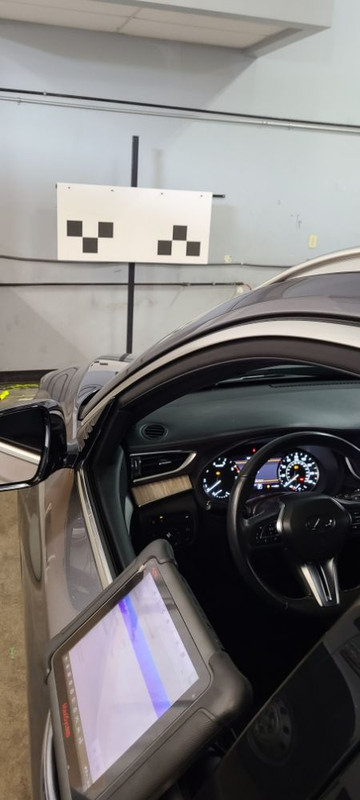
There are two common methods. Static calibration uses large printed targets or digital screens set up at precise distances and heights in a controlled space. Dynamic calibration uses a road drive at set speeds and distances under certain conditions, often combined with a pre‑drive setup. Some cars need both. The best shops perform a pre‑scan to record diagnostic trouble codes and system health before replacement, then a post‑scan and calibration afterward. You’ll want both reports.
This step is not fluff. I’ve seen lease inspectors plug a handheld tool into the OBD port, scan for active ADAS faults, and mark a charge for unresolved issues. A lane departure warning that throws a code because calibration was skipped can turn an otherwise clean return into a bill. Calibration usually adds 1 to 2 hours and $200 to $500 to the job, depending on brand and method, but it can save more than that in fees and headaches.
How to choose a shop that keeps you out of trouble
You’re not shopping for the cheapest sticker price; you’re buying competence and documentation. Call a few local providers, not just the national chain. Ask specific, practical questions: do you have the space and equipment for static calibration on my make, or will you perform a dynamic calibration and provide a printout? Are your technicians certified on my brand? Will you reinstall and pair the rain sensor, humidity sensor, and any HUD hardware? What warranty do you provide on leaks, stress cracks, and calibration?
Pay attention to how they discuss parts. A professional will tell you the glass manufacturer, whether the part includes the acoustic interlayer, and whether your VIN requires brackets or camera shims. If they promise same‑day service without asking about cameras, HUD, or sensors, be cautious. Speed is good, but skipping steps is not.
Price ranges help with context. For a mainstream sedan without HUD, aftermarket glass with calibration often lands between 350 and 700 dollars cash price. OEM with calibration runs between 600 and 1,400 dollars, sometimes more for luxury models. If your windshield hosts heating elements, an infrared reflective coating, or a specialized HUD area, budget toward the higher end.
Document first, then fix
Lease inspectors love evidence. Photograph the damage immediately, with a focus on scale. A simple trick helps: place a coin next to the chip and shoot two angles, one straight on and one at an oblique angle to catch the crack length. Capture the odometer and the date if your dash shows it. Email the photos to yourself so you have time‑stamped copies outside your phone’s gallery. If the chip grew into a crack, take another round of photos before repair.
When the work is done, hold on to three documents: the invoice showing part numbers, the calibration report, and any warranty paperwork. If your insurer handled the claim and kept the paperwork behind a portal, download PDFs now rather than later. Six months from now, on lease turn‑in day, you’ll be glad you did.
Lease-end inspections and how glass is judged
Most lease companies offer a free pre‑inspection around 60 days before turn‑in, and they’ll bring a template for acceptable wear. The agent often uses a small card with measured windows. Anything within a tiny zone is considered normal, beyond that it’s billable. For glass, they will check for:
- Active cracks, regardless of length, in the driver’s field of view. Multiple unrepaired chips. Distortion or warping that affects clarity, sometimes visible with polarized sunglasses. Sensor or camera warning lights. Aftermarket glass that obviously lacks required features, such as the HUD window or acoustic layer.
If they flag glass issues, don’t panic. Ask whether you can repair or replace before turn‑in to avoid the charge. Most lessors prefer you handle it directly, because the car re‑enters inventory faster. Clarify the OEM requirement at this point if you haven’t already. Sometimes the report marks “replace windshield” without specifying OEM, and an email confirming equivalency can protect you.
Special cases: HUD, acoustic glass, and luxury leases
Not all windshields are equal. If you drive a model with a head‑up display, the glass has a narrow wedge or a special reflective area that prevents double images. The wrong glass creates a ghosted HUD that is visible in daylight and intolerable at night. Luxury brands often require OEM for HUD, and some will specifically call out their preferred suppliers. Acoustic glass matters too. The difference is more than marketing; on long drives, it reduces the low‑frequency rumble that tires create on concrete slabs. If your lease stipulates “return vehicle with equipment equivalent to that installed by manufacturer,” acoustic content qualifies. Make sure the part you install matches the original. You can check the code etched into the lower corner of the pane or ask the shop to confirm by part number.
If you drive a European luxury model, expect calibration to lean toward static methods with brand‑specific targets. Some dealers insist on performing the calibration in‑house after the glass shop installs the pane. That adds a day and a fee, but it meets policy and ensures the brand’s software updates are applied. If your service schedule includes a software update or a recall for the camera system, coordinate the glass work after the update to avoid repeating the calibration.
Cost control without cutting corners
There are ways to keep costs in line and still satisfy lease requirements. Shop labor matters more than people think. A mobile technician may charge less, but only if your vehicle supports dynamic calibration and your roads allow it. Static calibration needs a controlled environment and targets set at exact distances. If a mobile tech suggests skipping calibration because the dash has no warning light, that’s a corner you should not cut. Spend the extra to do it right once.
Insurance approval can be nudged with clear documentation. Provide the glass shop’s statement that the vehicle requires a camera calibration and the cost. If your policy includes zero‑deductible glass, ask whether OEM is covered when required by the manufacturer. Some carriers have a checkbox for “OEM required by vehicle safety systems.” If the first agent says no, call back. Reps vary, and a second pair of eyes can interpret the policy differently, especially when you reference the exact owner’s manual language for camera recalibration.
If your lease is ending within 30 days and the windshield is borderline, consider using the pre‑inspection to get a formal assessment. If they call it normal wear, don’t touch it. If they mark it as chargeable, ask for a repair window. In many cases, fixing it yourself remains cheaper than the standardized fee the lessor would apply later.
The right way to get a windshield quote
The fastest way to waste time is to ask for a generic Auto Glass Quote without the details shops actually need. Have your VIN handy. It unlocks the build sheet, including whether your car left the factory with acoustic glass, heated wiper park, built‑in antenna, or HUD. Tell them explicitly whether the car has lane keep assist, automatic emergency braking, rain sensors, or a heated windshield area. If you want to compare options, ask for separate numbers for OEM and OEM‑equivalent aftermarket, each including calibration and taxes. A precise Windshield Quote that spells out the part number, the calibration method, and the warranty makes it easier to get your insurer onboard and your lease company satisfied.
Weather, adhesives, and drive‑away times
There’s a practical, messy part of every windshield replacement that people forget: adhesives cure on their own timeline. Most shops use urethane adhesives with safe drive‑away times between 30 minutes and 4 hours depending on temperature, humidity, and product. In winter, curing can take longer. If your job requires static calibration on the same day, schedule early to leave time for adhesive set, calibration, and a water leak test.
Ask the shop whether they will reuse moldings and clips or replace them. Old clips can fail after a few car washes, letting wind noise creep in. On a lease, wind noise can be flagged as a defect during a test drive. Replacing clips is cheap insurance against that complaint.
The economics of repair vs replace
Repairing a small chip costs a fraction of replacement and avoids disturbing the camera housing. The process takes about 20 to 30 minutes and is often covered by insurance at no cost. The key variables are chip size, location, and age. Fresh chips repair best. Dirt and moisture seep into older damage and reduce clarity. If the chip sits in the driver’s direct view, even a good repair may leave a mark that an inspector can notice. In that case, replacement avoids the argument.
If you replace, you’re paying for the glass, the molding or clips, labor, and calibration. Aftermarket glass narrows the price gap, but calibration remains standard. If your out‑of‑pocket is close either way, OEM gives you cleaner documentation and fewer debates at lease end. If the delta is large and your lease does not demand OEM, the quality of the installer becomes the deciding factor.
Mistakes that turn a simple job into a lease-end bill
I have seen a few missteps turn into expensive lessons. The first is ignoring a chip until it grows across the pane. No inspector will call that normal wear. The second is accepting a replacement without calibration and assuming the absence of a dash light means all is well. Cameras can function poorly without immediate warnings, and the lease turn‑in tool will catch it. The third is losing the paperwork. You may know the shop used OEM glass, but the inspector needs proof. The fourth is choosing a budget pane that lacks the acoustic layer or HUD clarity and trying to live with it. You will notice the difference, and so will a trained inspector. The fifth is covering the chip with a sticker and hoping for grace. Lease policies are specific about glass; deception rarely helps.
How to move quickly when you’re busy
Life gets busy, and glass damage never arrives on a free afternoon. The fastest workable sequence looks like this. Take quick photos, then call your insurer to open a claim and note your preference to choose the shop. Next, contact two reputable local shops with your VIN and ADAS list, ask for a written Auto Glass Replacement quote that includes calibration, and request two versions if you’re comparing OEM and aftermarket. Ask your lease company whether OEM is mandatory for your VIN. Choose the shop with the clearest plan and documentation, and schedule as early in the day as possible. When the work is done, verify that rain sensors, auto high beams, and lane keeping behave normally on a short drive. File the invoice and calibration report with your lease paperwork.
When the dealer should handle it
Dealership pricing is often higher, but there are scenarios where it is worth it. If your brand requires proprietary software to complete calibration, the dealer may be the only one with access. If your lease explicitly mandates dealer parts and service for safety systems, follow that path. If your vehicle has a head‑up display with visible ghosting after an aftermarket install, the dealer can source the exact pane to fix it. And if you’ve had repeated calibration failures with a third‑party shop, the dealer can diagnose a misaligned camera bracket or a software issue that isn’t obvious to generalist glass techs.
Seasonality and road realities
Windshield damage follows seasons. In spring, thawing roads shed gravel, and highway work crews spread debris that breaks loose at speed. In winter, plows leave a trail of sand and salt that never quite clears. If your commute runs behind pickup trucks with uncovered loads, give yourself an extra car length or two. That space buys you fewer dings than any insurance hack. If you live in a hail belt, park under cover and consider a higher‑end glass rider that covers both repair and replacement with minimal friction. Leases are short by design; reduce exposure, and you lighten your maintenance load.
The bottom line
If you lease, the best play is simple. Fix glass promptly, follow the rules in your contract, and keep your paperwork. Choose shops that calibrate correctly and document it. Decide between OEM and aftermarket based on your lease language, your vehicle’s features, and the installer’s track record. Get a precise Windshield Quote or Auto Glass Quote that spells out parts and calibration, not just a lump sum. Small decisions early prevent big charges later, and a clean inspection day feels a lot better than arguing over a crack you could have stopped months before.